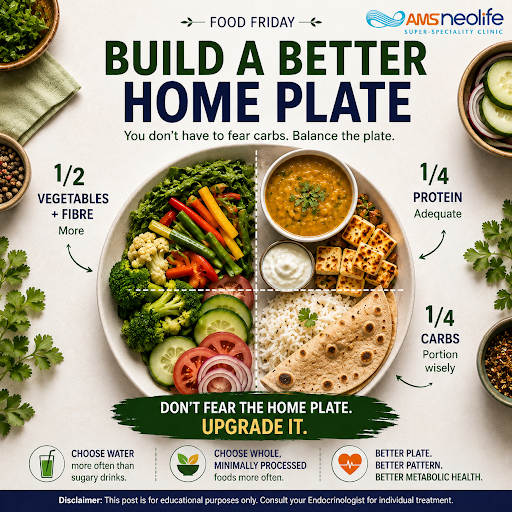
Rice is not the villain. Roti is not the villain.
The better question is:
“What is the rest of your plate doing?”
A practical way to build a more metabolic-friendly Indian meal:
½ plate → non-starchy vegetables Sabzi, leafy greens, cucumber, tomato, cauliflower, beans, bhindi, etc.
¼ plate → protein Dal, chana, rajma, paneer, curd, eggs, fish, chicken, tofu or other suitable protein sources.
¼ plate → carbohydrate Rice, roti, bhakri, millets or other whole/less-refined carbohydrate choices—with portion individualized to the person and their metabolic goals.
Then make two simple upgrades:
Choose water more often than sugary drinks. Choose whole/minimally processed foods more often than refined and ultra-processed foods.
The 2026 ADA Standards of Care do not prescribe one ideal percentage of carbohydrate, protein and fat for everyone with diabetes. Instead, they recommend individualized eating plans that consider food quality, total calories, metabolic goals, preferences and culture.
They specifically encourage non-starchy vegetables, whole fruits, legumes, whole grains, nuts, seeds and lean proteins, while minimizing sugar-sweetened beverages, sweets, refined grains and highly processed foods.
Don’t fear the Indian plate. Upgrade it.
Disclaimer: This post is for educational purposes only. Consult your Endocrinologist for individual treatment.
#FoodFriday #IndianDiet #DiabetesNutrition #MetabolicHealth #draltamashshaikh